Subtotal $0.00


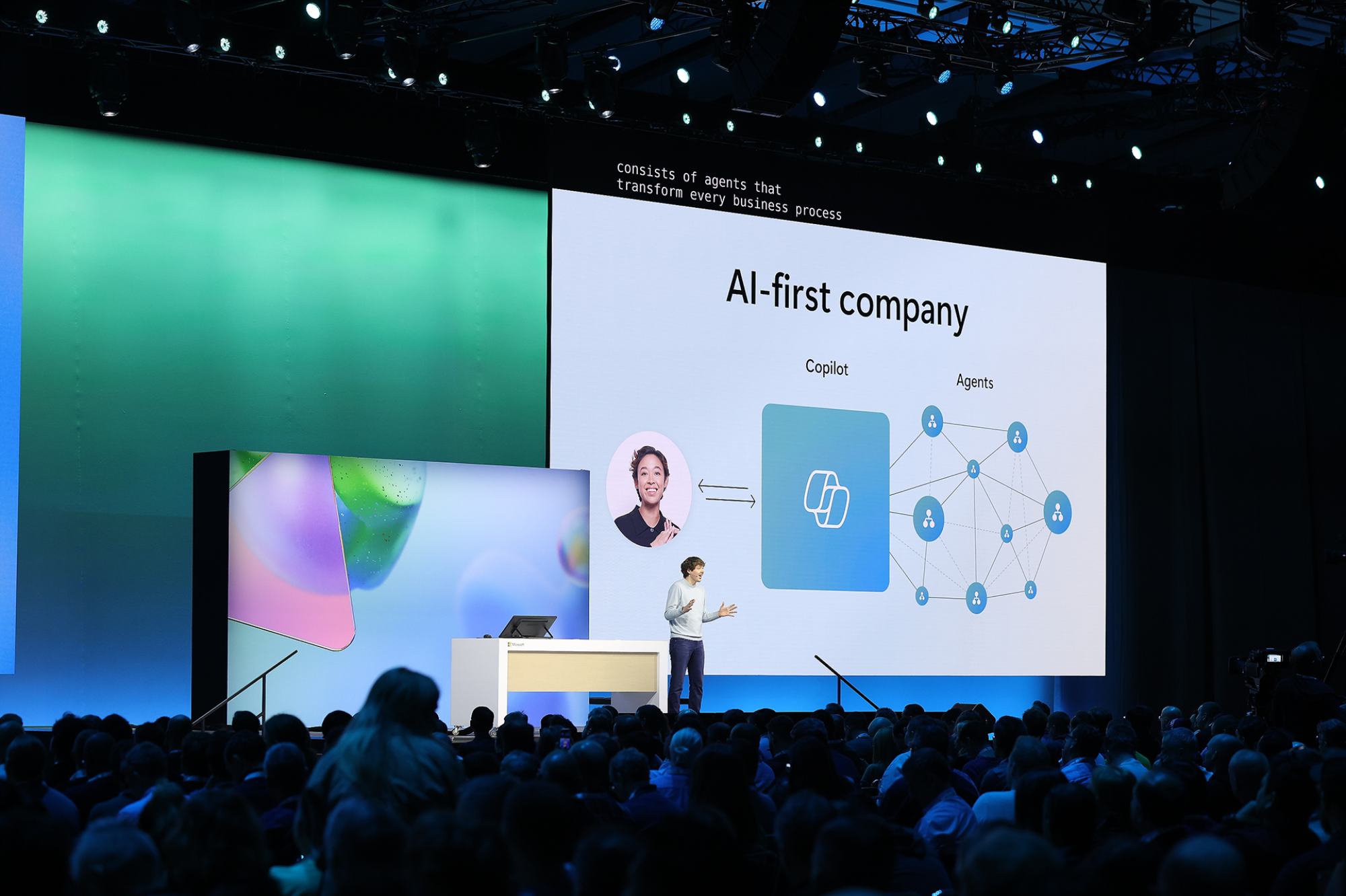
Many industries are transforming their business because Artificial Intelligence unlocks new potential to improve efficiency within a business. Azure AI strives to offer new capabilities to users. Microsoft Ignite 2024, showcased subsectors of ‘advancing towards specific business needs’ aiming at optimizing governance processes.
Microsoft wants companies to leverage AI as part of their operating systems. This not only helps in structural enhancement for enabling long-term sustenance in overcoming the growing pace of digitalism in this modern world. It also creates a competitive advantage for organizations. This blog focuses on how businesses are changing through the use of Azure AI.
Azure AI Foundry helps companies design, customize, and scale next-generation AI apps and agents efficiently. It can be accessible via SDK or Portal. It ensures cost-effective AI app development and enterprise-grade management.
Some of its key features mentioned in Microsoft Ignite 2024 include:
Azure AI Foundry SDK: This is still in the preview stage but in the future, it will provide a single toolchain allowing the customization, testing, deployment, and management of AI apps with control & customization at an enterprise level. This comprehensive collection of models eases the coding experience in improving
AI developments allows companies to optimize the scaling of their apps. Developers may select from 25 ready-made app templates for application integration of Azure AI into their applications. This can assist them in rapidly creating applications including a simplified code interface that is available through Github, Visual Studio, and Copilot.
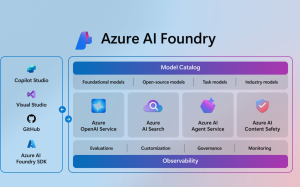
Azure AI Foundry Portal: Previously referred to as Azure AI Studio this is an extensive visual user interface that is in preview stages as of now. It helps developers discover and experiment with tools and services related to AI model creation. Resource management via its application helps in optimizing AI apps at scale.
Azure AI Agent service: This feature is coming soon and will allow software engineers to orchestrate as well as scale enterprise-grade agents. This can be implemented with data privacy-compliant features such as private networking and bring your storage.
Microsoft has continued to improve its partnerships because Azure AI collaborated with Weights & Biases, Gretel, Scale AI, and Statsig. They help make the model customization process faster from data preparation to deployment.
Azure AI will continue to guide customers with regards to governance risk and compliance workflows as it suggests further updates that include.
AI Reports: This will make it easier for organizations to ensure greater cross-functional observability, collaboration, and governance during the development and deployment of generative applications and fine-tuned AI models.
Companies may do thorough AI impact assessments with the help of Azure AI Foundry SDK and portal. This also embraces models, cards, versions, safety configurations as well as evaluation metrics.
The reports may be exported in PDF or SPDX files. It aids the team in proving their production readiness for the GRC governance, risk, and compliance workflows. It enables easy monitoring of apps that are live in production. This new feature will however be in preview mode privately in the next month.
Evaluating risk and safety for image content: Azure AI is enhancing risk and safety evaluations for content that is AI-generated. These updates will help in analyzing outputs from text to image, image to text, and memes combining both text and image. The goal is to assess the likelihood and severity of harmful or inappropriate content. Organizations can identify risks before and can make use of targeted fixes.
These include refining content filters and adjusting grounding data sources. Businesses can also modify system messages for safer AI interactions. This update will be available in the next month in the Azure Foundry Portal and the Azure AI Foundry SDK.
Azure Essentials was launched by Microsoft in July to help customers improve the reliability, security, and performance of their cloud and AI investments. It provides a centralized hub with tools, guidance, and best practices. There are two resources within Azure Essentials to support AI adoption:
AI scenario within the cloud adoption framework: It enables technical decision-makers with a prescriptive guide that will help companies prepare to deploy AI workload in production. This cloud adoption methodology framework adapts to responsible AI principles that assist customers build an AI foundation. This foundation will support the design, governance, and ongoing management of AI workloads. It assists users with everything from developing adoption strategies to managing the AI workload in production.
AI workload within the well-architected Azure framework: The framework assists in the overall workload design process because architects have to deal will several AI workloads in designing tasks at hand. This new set of guidance materials helps AI architects address functional and non-functional requirements which include usability, security, performance, efficiency, operational excellence, and cost optimization.
Azure Essentials is an important enabler for organizations looking to deploy AI projects at scale and aligned within the framework of Trustworthy AI principles. This means that businesses will be able to fully realize the benefits of investment in AI without compromising the highest standards of security, ethics, and performance.
The new AI models featured in the Azure AI model catalog address the companies’ needs in selecting the best model. Models from NTT Data are now released whereas BRIA AI is in the preview stage.
These new apps are empowered with the functionality of generative AI models. In Microsoft Ignite 2024, Industry-specific models are being reviewed now from Bayer, Sight Machine, Rockwell, Saifr, Cerence, and Paige. AI. Such models are intended for such industries as healthcare, agriculture, manufacturing, and finance.
The Azure AI search feature updates are in preview. This will help developers deliver and build better AI Apps with enhanced retrieval augmented generation (RAG) performance. Some features like query rewriting, available in preview, and semantic ranker are now powered by new upgraded language models.
These language models deliver better responses and give improved app experience. Additionally, Azure AI search will be integrated with GitHub models. This will enable developers to explore and create an RAG application using a free AI Search Index. This can be accessed directly from Github Marketplace.
To conclude, you can say that Azure AI is redefining the way organizations can make use of tools for developing and managing AI apps. It enables companies to be most efficient and remain competitive in the rapidly evolving digital ecosystem.
The purpose of the event is to promote Microsoft Cloud technology. The Microsoft Ignite event will show the latest artificial intelligence technologies and business solution information that has emerged recently in Microsoft.
Azure functions are known as serverless compute services that enable developers to run event drive code without worrying about the infrastructure.
Azure automation can be explained as it helps sustain the management of your company for the entire lifespan of your applications and infrastructure.
Comments are closed